“Epic Storm” Retreat and Leaks on the “End of the War” on Iran – Analysis
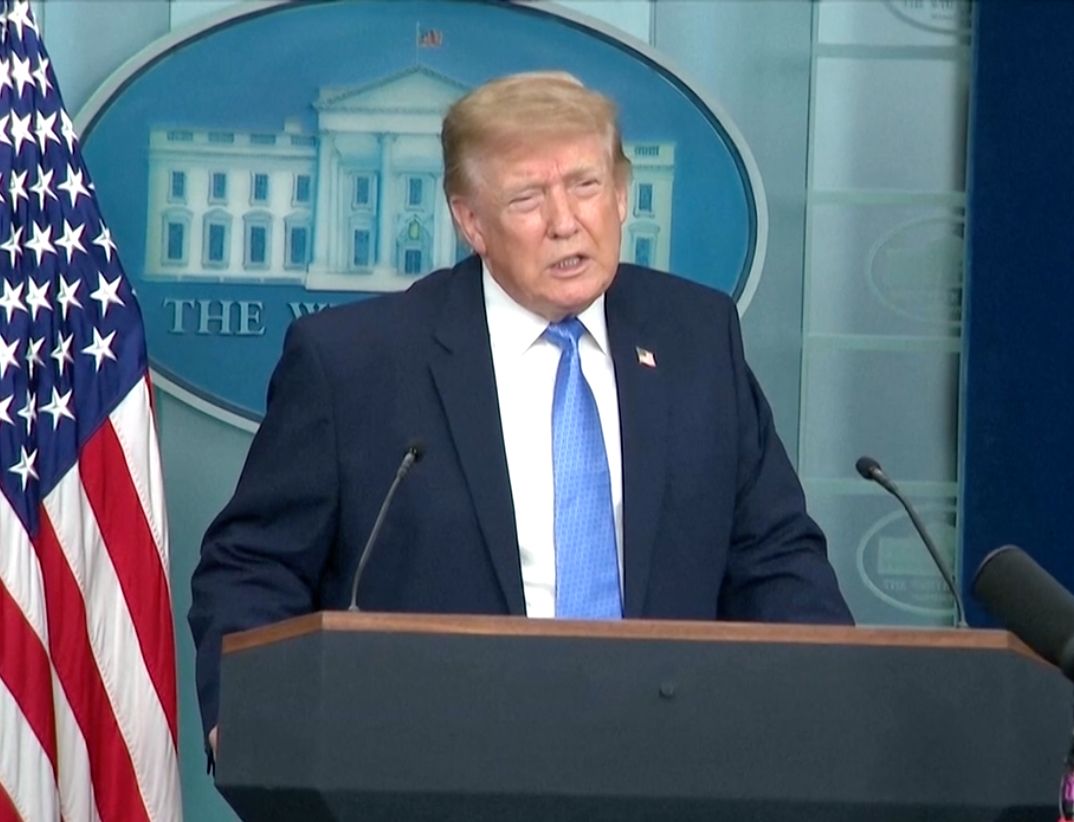
Trump Ends the Military War on Iran Following the Midterm Earthquake and Maintains the Economic Blockade
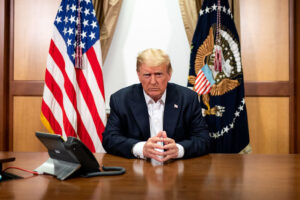
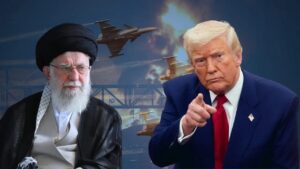
In an unexpected move, US President Donald Trump announced the end of the war with Iran, declaring it “effectively over militarily.”
In a surprise development, US President Donald Trump announced that the direct military war against Iran has become “effectively over militarily,” pointing to “positive momentum” driving the diplomatic negotiation track toward ending the raging regional conflict.
Trump’s official and direct statements came on Monday, November 9, 2026, from inside the White House press briefing room, in which he confirmed that the US administration decided to freeze plans for expanded airstrikes and suffice with remaining in a “status quo” phase, in response to the desire and interests of allied neighboring countries in the Arabian Gulf region. He pointed out that Israel and the region have been protected from Iran’s dangers.
This sudden strategic shift came in statements made by US President Donald Trump immediately following his closed-door meeting in the Oval Office with Qatari Prime Minister, Foreign Minister, and chief mediator Sheikh Mohammed bin Abdulrahman Al Thani, whose country is leading intensive mediation between Washington and Tehran. Trump openly acknowledged that the war, whose first spark was ignited on February 28, 2026, via joint US-Israeli strikes, inflicted severe political damage and a historic defeat on Republican candidates in the Congressional midterm elections due to surges in fuel prices and the sharp rise in living costs for the American citizen.
Shift in American Doctrine from “Regime Change” to “Static Strangulation”
What is Happening Behind the Scenes:
Leaked diplomatic reports and parallel intelligence meetings revealed important dimensions that explain the dynamics of this retreat:
The First Dimension is represented by the Iranian 48-Hour Proposal – via Doha:
Leaked diplomatic minutes reveal that the Qatari Prime Minister brought to the table of Trump and Vance in the “Oval Office” a negotiating proposal drafted by the Iranian leadership that includes two executive phases divided into two days, as an alternative to the targeting option and to end the war. It came as follows:
- Day One (Confidence-Building Measures): The United States immediately lifts the naval blockade on Iranian ports; releases frozen financial assets; and Tehran opens its sensitive nuclear facilities to inspectors from the International Atomic Energy Agency (IAEA).
- Day Two (Opening Vital Corridors): Iran fully opens the Strait of Hormuz to commercial oil tankers, and direct technical negotiations begin regarding uranium enrichment.
The Second Dimension is represented by the concept of “Retreating with Minimal Losses”:
“Militarily obliterated and decapitated” a propagandistic linguistic expression used by Trump to describe Iran’s state. It is an expression whose objective is to formulate a phantom victory before domestic public opinion while the White House swallowed political defeat, as the US military was unable to stop Iranian missile attacks on bases or protect vital navigation, which caused global oil prices to rise past unprecedented critical levels that harmed the Republican candidate.
According to information, parliamentary pressure forced Trump to pull the fuse of escalation to protect his security team. The Pentagon faces a severe internal crisis with Congress returning to session under a new majority, following prominent Republican Representative Thomas Massie’s submission of a parliamentary bill aimed at impeaching and questioning Secretary of Defense “Pete Hegseth,” legally accusing him of violating constitutional legislation and managing a broad war that has no legal cover or official authorization from lawmakers.
Conversely, the demand by the Secretary of Iran’s Supreme National Security Council, Mohsen Rezaei, in a hardline statement via the X platform addressing the US administration to “stop fabricating and manufacturing fake news about imaginary negotiations,” and confirming that Tehran will not accept any dialogue that does not begin with acknowledging its seven comprehensive demands foremost among them the complete termination of the economic naval blockade imposed on oil ports was what stood as an obstacle to negotiation.
In addition to the European and Atlantic warning messages issued by the foreign ministers of France, Britain, and Germany, in which they intensively pressured US Secretary of State Marco Rubio during the meeting held in Paris, explicitly emphasizing that the economic cost and damage inflicted on global supply chains are caused by the closure of the Strait of Hormuz. Furthermore, the cyberattacks suffered by vital French installations have surpassed the strategic endurance capacity of Washington’s allies.
Active Figures and Institutions Behind the Scenes and the Chronological Sequence of the Conflict Path for the Year 2026:
First: Figures:
- JD Vance, Vice President (Trump Administration): He openly admitted, for his part, that the economic cost of the war was the direct reason behind the crushing of Republicans at the ballot boxes.
- Thomas Massie, Republican Representative from Kentucky (Congress and Pentagon): Led an internal movement in which he submitted eight articles of impeachment against Secretary of Defense Pete Hegseth, on charges of waging an illegal war and violating the War Powers Resolution of 1973.
- Mohsen Rezaei, Head of the Iranian National Security Council (Iranian Side): Delivered, alongside general staff officers, a hardline speech rejecting “imaginary negotiations,” demanding “Tehran’s seven conditions” for comprehensive surrender.
- Ali Abdollahi, Chief of Staff of the Iranian Armed Forces (Iranian Side): Came out threatening “unprecedented surprises and unrestricted measures outside the region” in the event the structural blockade continues, which demonstrates Iran’s awareness of Trump’s critical domestic position, and places the Middle East before a fragile equation: no comprehensive war that burns the economy, and no real peace that ends the conflict.
Second: Timeline:
- February 28, 2026: US and Israeli airstrikes targeted Iran’s infrastructure, under the name “Operation Epic Fury” to destroy Tehran’s capabilities.
- July 7, 2026: Collapse of the spring understandings and the renewal of violent mutual waves of bombardment between the two sides.
- November 3, 2026: The Republican Party loses control of both chambers of Congress (the House of Representatives and the Senate) to the Democrats, following the US Congressional midterm elections.
- November 8 and 9, 2026: Announcement of the “Iron Gates” task force with the aim of expanding the naval blockade to a land blockade, immediately followed by Trump’s media appearance in which he ended the military war.
Geopolitical Analysis and Prospects for the Phase
Trump’s announcement does not mean peace; rather, it is a radical shift in tactics from costly hot confrontation represented by aerial warfare to a cold and static battle of attrition.
While President Trump attempts to market this linguistic retreat as a “decisive military victory” on the pretext that Iran’s offensive capabilities, air force, and naval vessels have been wiped out and subjected to a strategic decapitation due to military operations that erupted since February 28, 2026, the political data on the ground declares a completely different reality driven by partisan calculations and domestic pressures, represented as follows:
1. The Punitive Midterm Earthquake:
The actual motive for Trump adopting a sudden tone of de-escalation is the harsh and humiliating defeat suffered by the Republican Party in the Congressional midterm elections. Republicans lost control of both legislative chambers (the House of Representatives and the Senate) to the Democrats as a result of a broad punitive vote by the American voter. Vice President and its security frontman JD Vance openly admitted that the exorbitant cost of the war and the unprecedented, crazy rise in retail living fuel prices were the main path that destroyed the party’s chances at the polls.
2. Tactical Shift: From Aerial Bombardment to “Iron Gates”:
This military retreat does not mean comprehensive peace; rather, it represents an American transition from an open fiery confrontation strategy which did not succeed in stopping the missile threat to a strategy of “static structural strangulation.” Trump clearly explained that the United States will maintain the largest naval blockade in history in the Strait of Hormuz to prevent Iran from exporting oil, alongside activating the joint ground task force “Iron Gates,” which was announced to prevent the arrival of weapons and logistical supplies via land corridors.
Through this military freeze, Washington attempts to achieve three objectives:
- The Atlantic Military Tactic Axis and Calming Energy Markets:
Transitioning from expanded aerial bombardment to a static naval blockade and ground encirclement, aiming to reduce military human casualties and lower fuel prices domestically. This is indeed what happened; as soon as the de-escalation statements were launched, Brent crude fell by 3% to reach $89.66. - The Domestic Front Axis and Containing a Hostile Congress:
Maneuvering behind “locked and loaded,” aiming to absorb the anger of the incoming Democratic majority in Congress and to avoid questioning of senior commanders, which is what Trump actually sought in protecting his Secretary of Defense from parliamentary impeachment. - The Diplomatic Efforts Axis and Empowering Regional Allies:
Opening an indirect mediation window via Qatar and Turkey and conditioning Tehran’s flexibility, aiming to formulate a new nuclear agreement ensuring weapons-grade purity does not reach 90%, while focusing on financial pressure and the naval blockade to prevent Tehran from diverting oil revenues to its regional proxies.
The direct drop in Brent crude prices immediately upon the issuance of Trump’s statements to fall below the $90 per barrel level (its lowest level since August) proves that the war is fundamentally now being fought in financial markets and the corridors of the Western citizen’s daily living economy.
The Middle East currently stands in a critical gray phase. Despite the success of the American ballot boxes in temporarily curbing the aerial military war machine, the continuation of the strict economic blockade on Iran and its refusal of negotiation conditions without lifting sanctions remains the fuse ready to ignite the conflict at any upcoming maritime or cyber friction.