

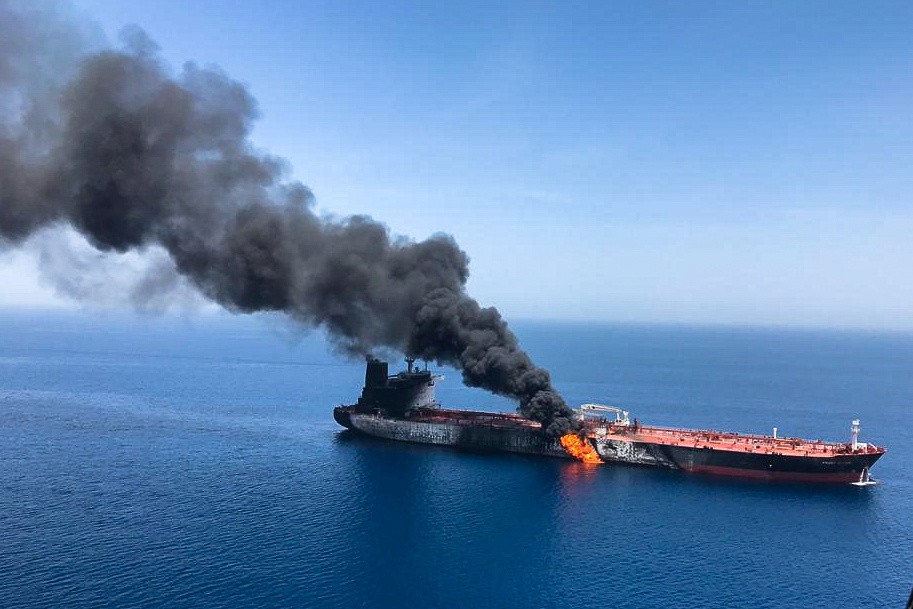
Surge in maritime strikes drives oil prices up, while the Pentagon finalizes contingency plans amid anticipation of the U.S. midterm elections.
The Strait of Hormuz region has experienced a severe military escalation in recent days. The U.K. Maritime Trade Operations (UKMTO) reported that at least ten vessels have been directly attacked since last Sunday, bringing the total number of maritime strikes in October to 23. These projectile attacks resulted in the sinking of both a container ship and a dry bulk carrier near the strategic shipping lane. These operations, along with ongoing drone and missile strikes targeting regional airports and Saudi Aramco infrastructure, are linked to Iran-backed Houthi forces. The resulting instability has placed significant strain on global energy markets, pushing crude oil prices upward.
On the political front, the crisis remains locked in a sharp diplomatic stalemate. During talks with the Prime Minister of Georgia, Iranian President Masoud Pezeshkian denied that Tehran seeks nuclear weapons and expressed readiness for dialogue while condemning U.S. sanctions. However, the Iranian military maintained a harder line, with an army spokesman declaring that the Strait of Hormuz will not reopen unless U.S. forces completely leave the Middle East. Meanwhile, in Washington, President Donald Trump stated he will not launch military strikes against Iran before the midterm elections on November 3rd, though Pentagon and CENTCOM planners have been officially instructed to finalize contingency options as a precautionary measure.