Iraq Bridges Views Between Tehran and Washington Amid Security and Geological Developments in the Governorates
Baghdad Adopts Regional Foreign Ministers Initiative to Contain Threat of Iran War Coinciding with Dismantling Secret Energy Networks and Recording Seismic Activity in Kurdistan
In order to save the region from the danger of an open military confrontation, alongside activating field intelligence efforts to protect the national economic infrastructure, as well as recording natural geological indicators in northern Iraq.
In the following lines, we review the most important data related to these rapid developments and their details.
The Diplomatic File and the Iraqi Regional Initiative:
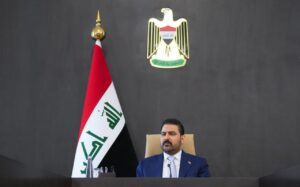
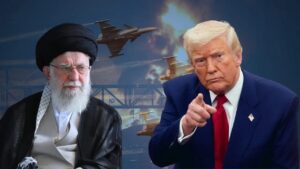
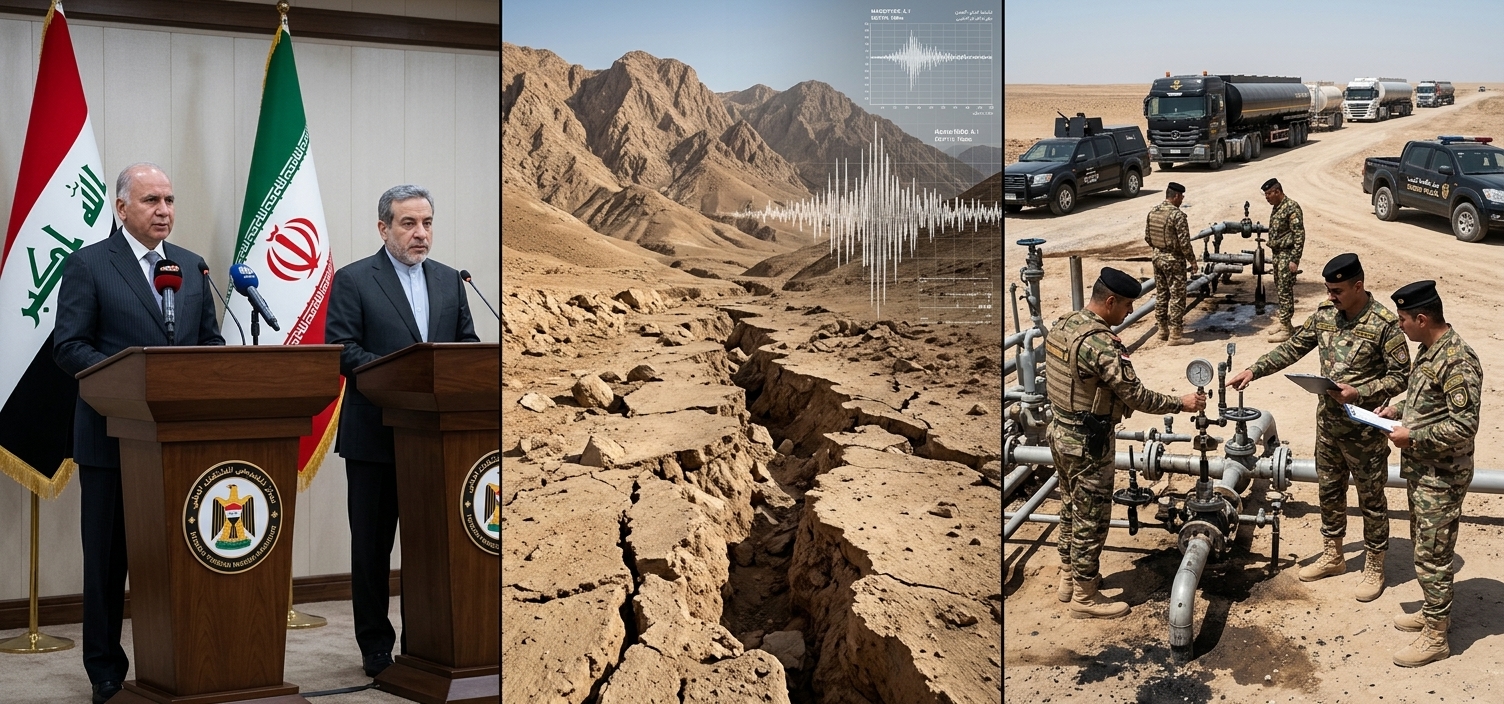
On the external front, the regional movements of the Iraqi Ministry of Foreign Affairs come at a critical stage of geopolitical tension sweeping the Arabian Gulf region and international energy corridors, following the US Congressional midterm elections and highly anticipated White House statements. Iraqi Foreign Minister Fuad Hussein conducted a lengthy and intensive telephone call with his Iranian counterpart, Abbas Araqchi, during which they discussed the direct repercussions of the Congressional election results on stability in the Middle East and discussed the possibilities and dimensions of a renewal of the armed conflict that erupted on February 28 between the United States and Iran. Baghdad introduced a proposal to the clauses of the initiative put forward by Fuad Hussein, which included the formation of a mini-ministerial committee to include the foreign ministers of countries geographically adjacent to Iran and a number of influential regional countries. The mission of this committee is to conduct coordinated and direct field visits to both Tehran and Washington, with the aim of conveying messages, formulating practical peaceful understandings, and bridging the operational gaps that led to the stagnation of last June’s negotiations. For his part, Iranian Minister Abbas Araqchi reviewed the official vision prepared by Iran prior to the US vote, noting that Tehran is not satisfied with theoretical commitments but demands tangible steps on the ground. This vision was diversified across four primary paths, which are:
A binding and strict timeline must be set to begin the negotiating path and avoid diplomatic procrastination. Showing conditional flexibility to fully reopen the Strait of Hormuz to the movement of international oil tankers in exchange for a reduction in Western military escalation. An immediate return to the clauses of previous joint understandings that took place under the sponsorship and guarantee of the Islamic Republic of Pakistan. Adding updated technical clauses and schedules related to uranium enrichment percentages and locations, and the future of UN oversight.
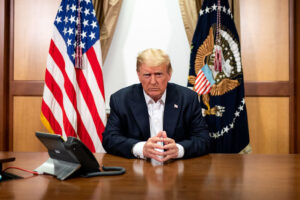
Leaked data indicates that this Iraqi move intersects with efforts led by the State of Qatar, which in turn sent a high-level delegation to Tehran to convince the Iranian side to study the recent US proposals. At the same time, US President Donald Trump reported via the Axios platform that he is “not in a hurry” to issue broad bombing orders for Iranian infrastructure, preferring to give diplomacy a final chance before moving forward with the military option.
Baghdad is desperately fighting to de-escalate regional tensions. The move by the current Iraqi government led by Prime Minister Ali Al-Zaidi is nothing but a pressing desire to protect its nascent sovereignty, as Iraq works to be the regional strategic link that seeks to transform destructive foreign competition into opportunities for economic integration. Decision-making centers in Baghdad consider that any collapse in the memorandum of understanding signed on June 18 between Washington and Tehran means turning Iraqi airspace once again into an open battlefield. This comes alongside sharp internal pressures facing the government, particularly with armed factions, such as the Kata’ib Sayyid al-Shuhada, announcing their rejection of some of what the government proposed regarding the handover of weapons, holding fast to their own vision regarding the regional conflict.
The Security File and Cracking Down on Petroleum Derivatives Smuggling Networks:
On the internal front and within the campaign to combat the shadow economy and protect sovereign wealth, the Energy Police Directorate, in coordination with the Federal Intelligence and Investigations Agency at the Ministry of Interior, executed a large-scale security operation. During the operation, joint forces managed to dismantle two organized networks for smuggling fuel and petroleum derivatives. The synchronized raids resulted in the seizure of 14 transport tankers equipped with secret tanks technically prepared to pass through checkpoints, in addition to seizing two river boats used to transport oil products via bypass waterways. This operation complements the Ministry of Interior’s statistics, in which it announced the arrest of 94 suspects, the seizure of 89 tankers, and the raiding of 8 major smuggling dens in the governorates of Karbala, Saladin, and Dhi Qar, with the confiscation of more than 2.2 million liters of non-compliant petroleum derivatives. According to the official spokesperson, Major General Miqdad Miri, these reports demonstrate the scale of the ongoing war of attrition between the state and organized crime networks.
The security dimension of dismantling the networks of tankers and boats proves that the financial blockade imposed regionally drives certain cross-border entities and networks to use Iraqi territory as a financial source to fund parallel activities. The success of the Energy Police Directorate in closing these outlets is deemed a vital and important step toward strengthening the confidence of international partners and foreign investment companies looking to build major infrastructure projects in Iraq, shifting from the mindset of a continuous security crisis to a mindset of sustainable development.
The Geological File and Seismic Activity in Sulaymaniyah Governorate:
The northern governorates, specifically the Kurdistan Region of Iraq, witnessed environmental activity monitored by the National Seismic Monitoring Network. The General Directorate of Meteorology and Seismic Monitoring announced the recording of a natural earthquake on Saturday evening, November 7. Its magnitude reached 3 degrees on the Richter scale, occurring in the evening at approximately 9:20 PM local time (Baghdad time). It is worth noting that the earthquake was centered inside the Iraqi borders in the northern regions belonging to Sulaymaniyah Governorate, and was clearly felt by local residents in the districts close to the governorate’s center. Official reports confirmed that the event was free of any human casualties or structural damage, while the Directorate issued an urgent appeal requesting citizens to rely exclusively on official data and stay away from rumors and exaggeration in an attempt to thwart efforts to cause panic.
It is worth mentioning that the region where the earthquake was recorded historically lies on the edge of the fault lines and seismic activity associated with the movement of the Arabian Plate beneath the Eurasian Plate. Providing accurate, real-time digital monitoring of earthquakes blocks the way for rumor-mongering networks trying to link any slight tectonic movement to military activities or unannounced explosions in the mountainous border regions, thereby contributing to consolidating societal stability amid a regional atmosphere charged with anxiety.