Iraq Resumes Oil Exports Under U.S. Protection Through the Strait of Hormuz
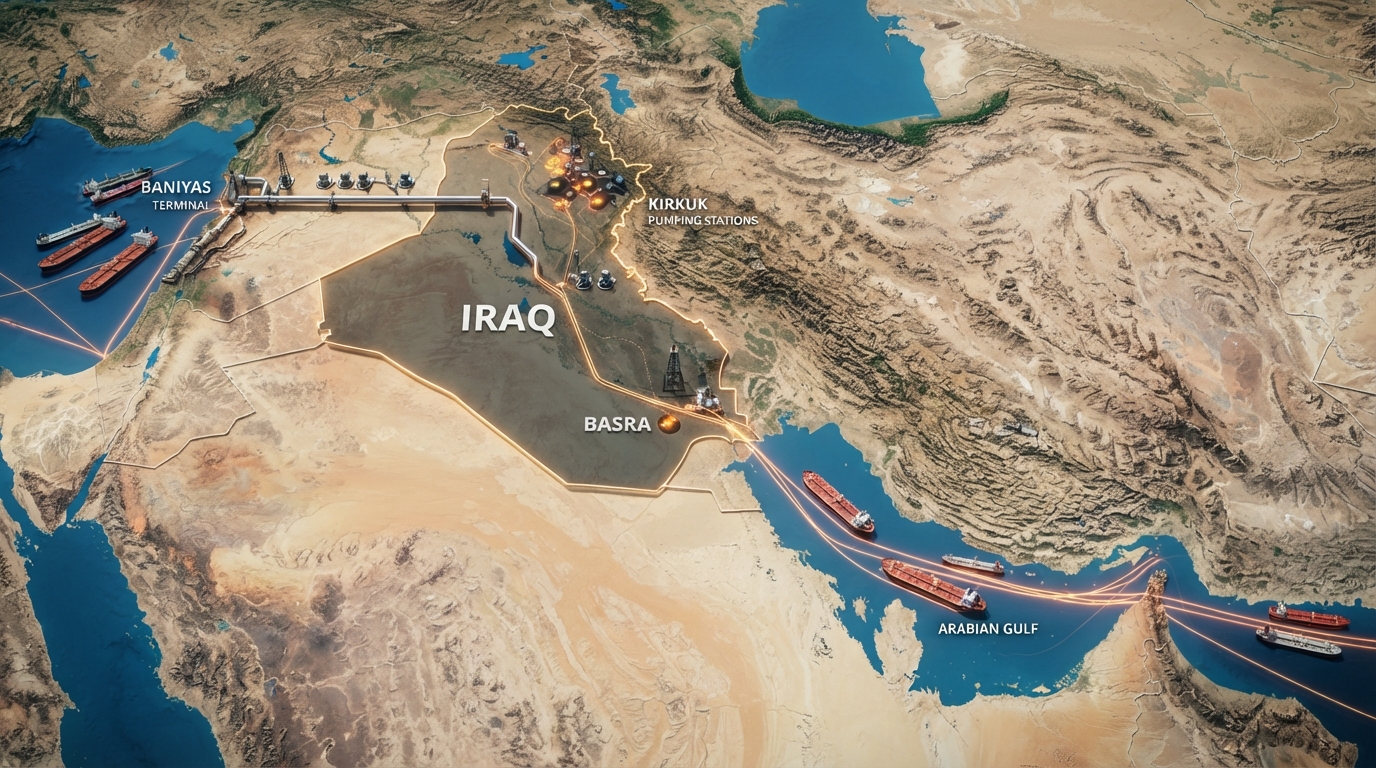
An illustrative map showing Iraq's geographic location and Iraqi oil transit routes by sea via the Strait of Hormuz and overland via Syria
Iraqi [oil] through the Strait of Hormuz, following months of shipping paralysis triggered by the U.S.-Iran war and its fallout.
Below is a look at the American conditions, the political repercussions in Baghdad, and the behind-the-scenes details surrounding the alternative shipping routes file.
First: How Iraqi Oil Transits and the Details of the Deal
In remarks to Arab and local outlets, Iraqi Foreign Minister Fuad Hussein outlined the actual mechanism for resuming exports. As it turns out, the agreement did not constitute a full reopening of the Strait of Hormuz in the literal sense, but rather a set of understandings reached between the Iraqi government and the U.S. side, broken down as follows:
- The Mechanism: Allowing tankers carrying Iraqi oil to pass through a safe shipping lane hugging the territorial waters of the Sultanate of Oman in the Strait of Hormuz and the Gulf of Oman, facilitated through U.S. arrangements.
- The Objective: Securing navigation and reassuring international shipping and insurance companies that had refrained from entering the Port of Basra over the past four months due to the risks of war and the ongoing conflict between Iran and the United States.
- The Outcome: Iraq’s oil exports surged from 2.65 million barrels per day in September 2026 to roughly 3.5 million barrels per day this past October, while total production reached around 4.49 million barrels per day, according to an OPEC report.
Second: The Political Price for Iraq and the U.S. Conditions
According to leaks and official statements, facilitating the passage of Iraqi oil did not come free of charge. The U.S. understandings were tied to a package of economic and political pressures and conditions, outlined below:
- Closing All Border Crossings Except Two: A statement by Iraqi Foreign Minister Fuad Hussein revealed that the U.S. Treasury Department asked Baghdad to shut down all land border crossings with Iran except for two, one of which is located in the Kurdistan Region. The aim is to help Washington tighten the economic noose on Tehran in exchange for allowing Iraq to keep its sole financial lifeline flowing through oil exports.
- Selling Oil at Steep Discounts: Despite global oil prices climbing to record highs and Basra crude averaging $111.79 a barrel, Iraq sold its oil shipments at heavy discounts ranging from $34.50 to $37 a barrel. According to the State Oil Marketing Organization (SOMO), this is attributed to soaring insurance costs and shipping risks in the conflict zone.
- Activating the Syrian Overland Route: Alongside the Omani corridor, Iraq has effectively resumed exporting oil by truck across Syrian territory to the Mediterranean port of Baniyas. According to reports by Radio Monte Carlo and Reuters, the Qatari company UCC is handling the transport of 120,000 to 150,000 barrels per day using a fleet of thousands of trucks.
Third: Escalation and Internal Division in Iraq
The announcement that Iraqi oil exports had resumed under the protection of U.S. forces sparked a storm of political and public controversy inside Iraq, centering on the following points:
- Sovereignty and Conflicting Narratives: The Foreign Minister’s remarks drew pushback from political and popular factions aligned with the Axis of Resistance and Iran. Critics view exporting under U.S. protection as a disregard for geography and Iran’s direct leverage in the Strait of Hormuz, pointing to a contradiction with earlier statements claiming regional coordination with Iran had granted Iraq an exemption to move its oil.
- Bowing to U.S. Pressure: Political factions in Baghdad argued that tying Iraqi oil exports to U.S. understandings backs the Iraqi government into a corner, forcing it to carry out Washington’s agenda against Tehran—such as closing border crossings—which threatens domestic trade and triggers livelihood crises in border provinces.
- Targeting of Tankers: Iraqi observers warned that placing Iraqi oil tankers under the banner of “U.S. protection” could turn them into potential targets or expose them to harassment should military escalation flare up again in the Gulf, rather than keeping them shielded under regional neutrality.
Fourth: The Strategic Dimensions Driving Baghdad’s Moves
- Economic Survival: Iraq suffered financial losses estimated at around $60 billion during just four months of halted exports, forcing it to seek a financing program from the International Monetary Fund (IMF) to cover its deficit and pay public salaries. Consequently, Baghdad opted to accept any safe corridor that guarantees the flow of dollars into the Federal Reserve, even if it entails harsh U.S. terms and steep discounts on oil prices.
- Diversifying Export Outlets: Baghdad has come to realize that relying on the Strait of Hormuz for over 90% of its exports is an existential vulnerability threatening its security and stability. As a result, it is now utilizing parallel routes—such as the Omani maritime corridor and overland trucking through Syria—while reviving the Ceyhan pipeline project toward Turkey and the Aqaba pipeline toward Jordan.
- Yielding to the Fait Accompli: Iraq once again finds itself caught in the crossfire of the U.S.-Iran conflict. Washington controls the oil revenues deposited in the U.S. Federal Reserve, while Tehran wields security and geographic influence over both the Strait of Hormuz and Iraq’s domestic arena. What the Baghdad government is currently doing is a forced balancing act to get its oil out by any means necessary to stave off internal financial collapse.