2026 Midterm Elections to Define the Rest of Trump’s Second Term
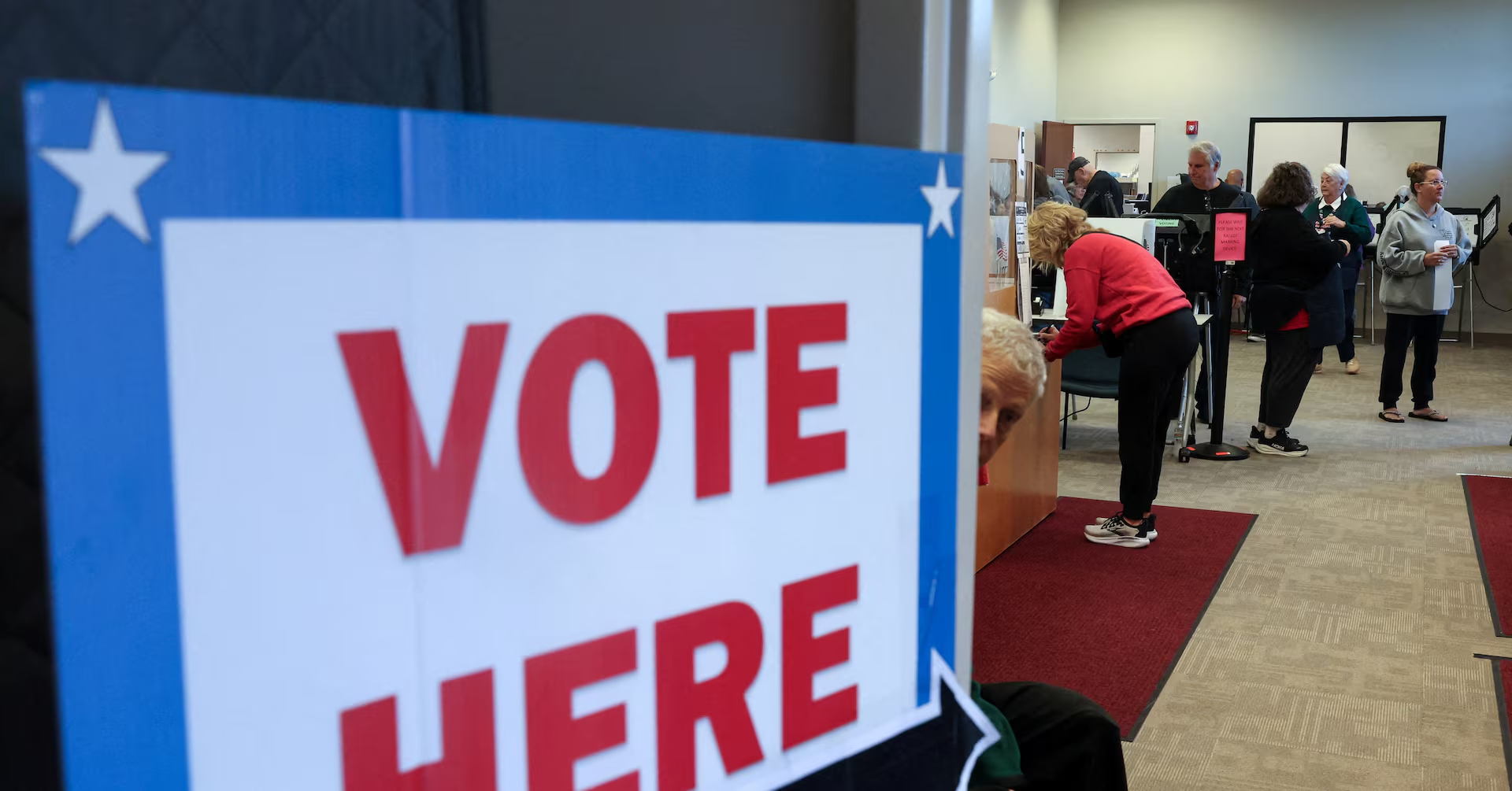
Historic Polarization Grills Polling Stations as Battle for Congressional Control Intensifies Amidst Soaring Inflation and Global Turmoil
Polling stations across the United States opened their doors on Tuesday morning, November 3, 2026, welcoming millions of voters in one of the most highly polarized and critical midterm elections in modern American history. Serving as a high-stakes referendum on the second half of President Donald Trump’s second term, this election sees both the Republican and Democratic parties locked in an intense battle for congressional control. The electoral warfare is unfolding against a backdrop of deep voter anxieties regarding domestic economic inflation, immigration enforcement, and ongoing geopolitical conflicts in the Middle East.
Record-Breaking Statistics and Early Voting Metrics
According to definitive data released by the University of Florida Election Lab, polling infrastructure has faced unprecedented historic turnouts; over 57 million Americans cast their ballots early before formal Election Day operations commenced. This staggering voting pool consists of roughly 32 million in-person early voters and more than 25 million mail-in ballots, heavily outpacing the 46 million early votes recorded during the 2022 midterm cycle. Today, the remainder of the nation’s approximately 210 million registered voters will determine the final partisan balance of power.
The Congressional Mathematical Battleground
Partisan control of the legislative branch hinges on precise structural thresholds across both chambers:
- House of Representatives: All 435 seats are up for grabs. Republicans currently preserve a razor-thin 218-214 majority with one independent and two vacancies. Democrats require a net gain of just 4 seats to reclaim the gavel and establish Hakeem Jeffries as Speaker of the House. Recent national trackers, including NBC News polling, award Democrats a comfortable 7-point preference advantage (52% to 45%) driven by mounting public dissatisfaction.
- U.S. Senate: A total of 35 out of 100 seats are contested 33 regular contests alongside 2 special elections in Ohio and Florida. Republicans maintain a 53-47 majority. Due to a highly defensive map forcing Democrats to protect vulnerable red-state seats, their path remains steep; they must secure 4 net gains for absolute control, as a 50-50 deadlock breaks in favor of the GOP via the Vice President’s tie-breaking vote.
Marquee Candidate News and Swing-State Focus
The outcome relies entirely on 11 crucial “toss-up” battlegrounds, dominated by localized high-profile dramas:
- Michigan: A massive political shockwave erupted following the sudden defection of Democratic Representative Haley Stevens, who revoked her endorsement of progressive colleague Abdul El-Sayed to back Republican Mike Rogers. El-Sayed, an Arabic-origin public health expert focusing his platform on Medicare for All, saw his progressive base react with a record-setting $2.4 million single-day grassroots fundraising surge.
- Texas: Embattled Republican Attorney General Ken Paxton is facing a surprisingly close challenge from young Democratic Representative James Talarico, who has successfully energized youth and Latino voting blocs. Senator Ted Cruz issued stark warnings that depressed conservative turnout could cost the GOP this historic stronghold.
- Alaska: Democratic nominee Mary Peltola is locked in a fierce dispute with incumbent Republican Senator Dan Sullivan, amid intense litigation surrounding the controversial listing of an independent minor candidate with an identical name Daniel J. Sullivan allegedly designed to split conservative votes.
- Other Vital Contests: Crucial operations are also locked within Ohio Sherrod Brown vs. Jon Husted, Iowa Josh Turek vs. Ashley Hinson, and Maine Troy Jackson vs. Susan Collins.
Behind-the-Scenes Legal Warfare and Challenges
Behind the scenes, both political factions have deployed robust legal frameworks to challenge outcomes post-election. The Trump administration, supported by the Justice Department, launched pre-emptive legal maneuvers demanding state officials freeze and separate thousands of mail-in ballots (including 20,000 in California and 400 in Washington) claiming alleged noncitizen voting-efforts blocked thus far by federal judges and the Supreme Court to preserve order. Conversely, Democrats have organized expansive lawyer networks to counter what they term “voter and official intimidation,” preparing to sue immediately if local boards refuse to certify tallies.
Definitive Election Results Timeline
There is no set or uniform time for when the final results of the 2026 midterms will be announced. Given the razor-thin statistical margins in marquee swing states, confirming the majority control of Congress could take days or even weeks. Initial poll closures begin at 6 p.m. ET in states like Indiana and Kentucky, followed by Georgia and Virginia at 7 p.m. ET. However, extended mail-in processing across massive states like California means Tuesday night is merely the start of a prolonged counting and legal verification process.
Strategic Analysis of Post-Election Scenarios
Scenario A: Democratic Congressional Wave (Full or Split Control)
- Domestic & Economic Impact: This outcome would instantly plunge the White House into severe institutional gridlock. With Hakeem Jeffries assuming the Speaker’s gavel, House committees would immediately launch expansive oversight investigations into alleged executive corruption. Economically, Trump’s planned tax cuts would stall; Democrats would leverage the debt ceiling and federal budget mechanisms to freeze further tax rollbacks, block mass deportation funding, and redirect domestic expenditures toward social spending and climate initiatives.
- International Impact: Washington’s foreign policy would face statutory constraints. A Democratic-led House would move to restrict funding for open-ended military operations in the Middle East, specifically targeting the U.S. war against Iran, which has already drawn $47 billion from the Treasury. Lawmakers would also seek to dilute unilateral trade tariffs to restore trade ties with European allies and stabilize global supply chains.
Scenario B: Continued Absolute Republican Legislative Monopoly
Domestic & Economic Impact: This result would hand Trump an unmitigated popular and political mandate, clearing all institutional obstacles to his conservative agenda. Congress would swiftly enact sweeping tax exemptions for tips, overtime, and Social Security while implementing hardline market protectionism. Domestically, Immigration and Customs Enforcement (ICE) would receive massive funding and authority to execute the largest mass deportation operation in modern history, alongside the rapid confirmation of conservative federal judges.
International Impact: The United States would adopt an aggressive, nationalist global posture. U.S. strategy would focus on monumental defense budget increases and steeper isolationist tariffs targeting both adversaries and allies specifically China and the EU. This scenario would grant Trump an unchecked hand to utilize direct military enforcement to resolve Middle Eastern conflicts and secure energy transit lines across the Strait of Hormuz.