China’s Practices in the Middle East Revealed by Intelligence and Media Reports – Analysis
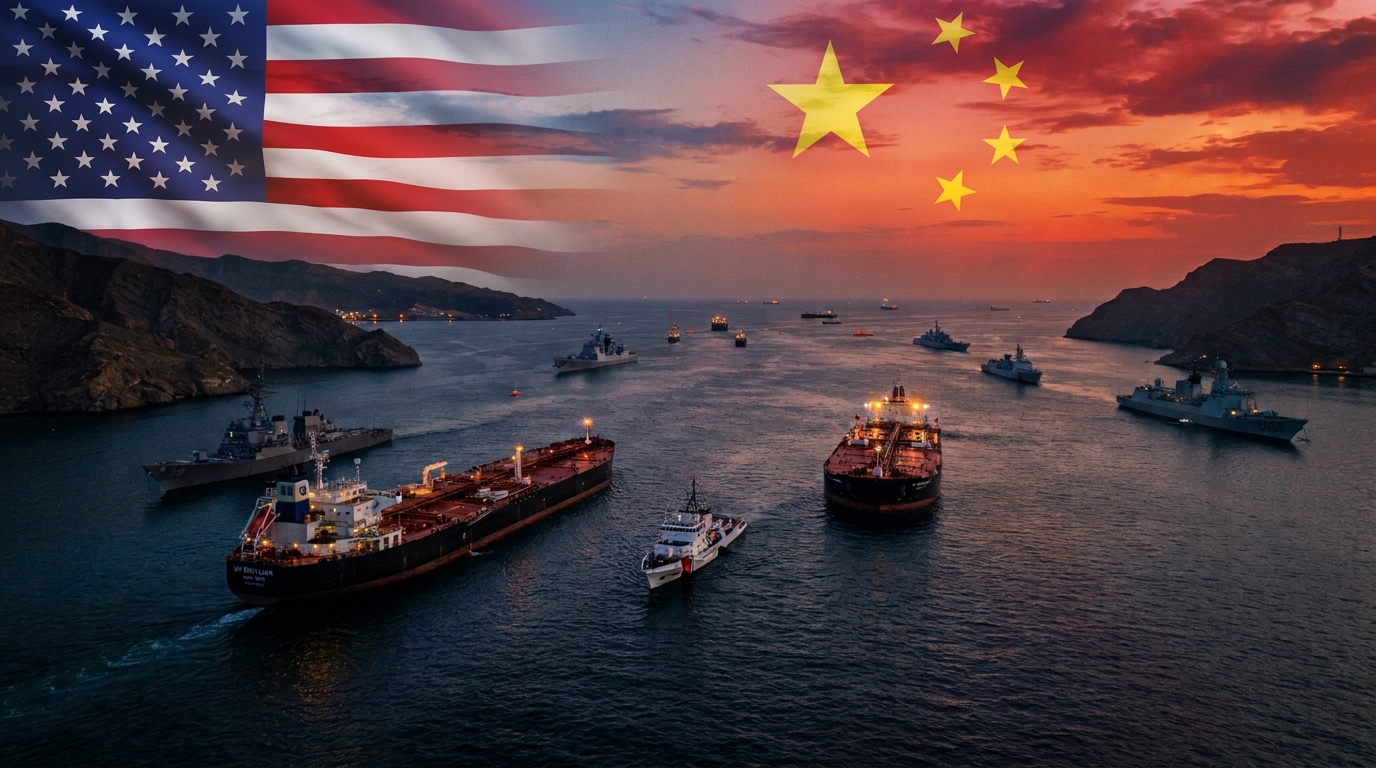
An illustrative image of China's presence in the Arabian Gulf
China has played an extraordinary role in its Middle Eastern maneuvers throughout 2026, following a dual strategy that combines publicly declared diplomatic neutrality with indirect technological and economic engagement behind the scenes. As the military and economic confrontations between the United States and Iran enter their ninth month—following the outbreak of U.S.–Israeli strikes on Tehran on February 28, 2026—Beijing has found itself at the heart of a highly complex equation stretching from Iraq’s oil fields to the Strait of Hormuz and international negotiating tables. Below is a breakdown of what military and media reports have uncovered regarding China’s role in the Middle East.
The Reality of China’s Role in the Middle East:
Despite Beijing’s avoidance of direct military involvement with any party, intelligence and media reports—such as those from The Wall Street Journal and the U.S.-China Economic and Security Review Commission—have exposed sensitive roles China is playing behind the scenes:
- First: Commercial Chinese satellite companies have supplied Iran’s Islamic Revolutionary Guard Corps (IRGC) with high-resolution imagery and real-time tracking of U.S. aircraft carriers and fighter jets in the region, such as the AI firm MizarVision. Furthermore, Iran has relied on China’s BeiDou navigation system as an alternative to the U.S. GPS to increase the precision of its missiles, according to U.S. reports.
- Second: Chinese materials have been used in manufacturing suicide drones and ballistic missiles—such as the Kheibar Shekan missiles that reached the Houthis—alongside reports of deals involving shoulder-fired air defense missiles, according to Pentagon assessments and investigations by Conflict Armament Research.
- Third: China has purchased 90% of Iran’s crude oil exports. Independent Chinese refineries have continued absorbing Iranian crude at steep discounts, preventing the total collapse of the Iranian economy despite U.S. pressure and tightened sanctions campaigns such as Operation Economic Spoils in August 2026.
- Fourth: Beijing has held direct talks and struck side deals with the Houthi group to ensure the safe passage of its tankers and commercial vessels through the Red Sea without being targeted—a move that has sparked unspoken resentment among Gulf states, according to Reuters reports.
The Map of Chinese Influence in Iraq, Iran, and the Gulf States:
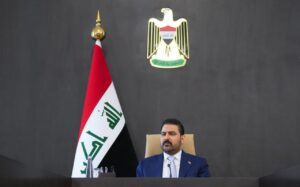
- In Iraq – A Power Struggle with the Al-Zaidi Government and Washington: China is the top buyer of Iraqi oil, holding stakes in fields that produce between half and two-thirds of Iraq’s crude, or managing them through its state-owned enterprises. China’s construction projects in Iraq amount to roughly $4.5 billion under the Belt and Road Initiative. However, a political shift in Baghdad led by Iraqi Prime Minister Ali Al-Zaidi since May 2026 emerged through a U.S.–Iraqi effort to break the Chinese and Iranian monopoly over Iraq’s energy corridors. This materialized in the signing of 48 deals worth $60 to $100 billion with major American firms like Chevron and ExxonMobil, including projects to rehabilitate the Kirkuk–Baniyas pipeline to bypass the Strait of Hormuz.
- In Iran – A Strategic Partner Without Combat Commitments: Beijing is preventing the economic collapse of the Iranian regime and has used its veto power in the UN Security Council—as it did alongside Russia in April 2026—to block the formation of international naval coalitions against Iran. It acts as a strategic partner without combat commitments, refusing to fight a proxy war on Iran’s behalf while pressuring Tehran not to close the Strait of Hormuz completely.
- In the Gulf States – Soft Diplomacy and Balancing Anxieties: China markets itself as a neutral peace mediator, capitalizing on declining confidence in U.S. security guarantees in the region. This was evident in the historic summit between President Xi Jinping and Sultan of Oman Haitham bin Tariq in Beijing in early November 2026, Chinese envoy Zhai Jun’s tour of Tehran, Muscat, and Riyadh in mid-November of the same year, and exchanged messages between Saudi Crown Prince Mohammed bin Salman and the Chinese President in an effort to contain the escalation.
Latest Field and Political Developments:
The Middle East has been experiencing severe “no peace, no war” tensions since mid-November 2026, marked by:
- Maritime Attrition in the Strait of Hormuz: Attacks on commercial vessels in the strait reached 37 in October 2026, followed by 14 confirmed attacks in the first half of November of the same year, in addition to 5 ships recently damaged by naval mines.
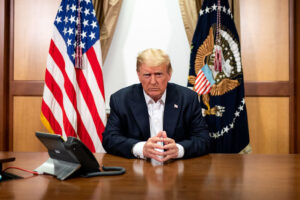
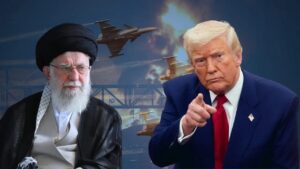
- Negotiation Breakdown: Acting on directives from Supreme Leader Mojtaba Khamenei, Iranian President Masoud Pezeshkian announced that Iran will not accept the continuation of economic stagnation and blockade, hinting at expanding military strikes if escalation persists. Meanwhile, U.S. President Donald Trump stated that Washington is “in no rush to make a deal” and prefers maintaining economic pressure and freezing Iranian assets, despite ongoing Qatari mediation.
- Proactive Chinese Maneuvering: Beijing has intensified its diplomatic contacts ahead of the anticipated summit on the sidelines of the APEC forum in Shenzhen, China—likely to be attended by President Trump, President Xi, and Russian President Putin—where China seeks to position itself as a guarantor for de-escalating the Gulf conflict in exchange for gains on trade and Taiwan.
Dimensions of the Next Phase and Prepared Plans:
During the upcoming phase, major powers will move along parallel tracks:
- The Chinese Plan – The New Security Architecture: Building a comprehensive regional security framework aimed at sidelining Western military alliances and linking Gulf stability to Asian trade and energy interests, based on Beijing’s vision presented by Chinese envoy Zhai Jun in Tehran this month.
- The American Plan – Chokepoint Strangulation and Bypassing: Isolating Iran economically without engaging in a large-scale ground war, alongside engineering alternative energy corridors—such as linking Iraqi oil to Syria and the Mediterranean Sea—and integrating Iraq into the Gulf–U.S. investment ecosystem to reduce global reliance on the Strait of Hormuz and weaken both the Iranian and Chinese leverage simultaneously.
- The Iraqi Plan – Repositioning: Reducing the relative market share of Chinese companies in favor of American and European firms, such as TotalEnergies, by executing the five-year plan to boost Iraqi oil production to 10 million barrels per day through new international licensing rounds in Baghdad.
Who Wins and Who Loses in the Upcoming Rounds?
- China Operates on Cold Pragmatism: China is neither an ideological ally of Iran nor a military enemy of the Gulf. It is a commercial superpower governed by the equation of energy and markets. Strategically, prolonged U.S. attrition in the Middle East serves Beijing’s interests by diverting American attention away from the Indo-Pacific—specifically Taiwan and the South China Sea. However, a full-scale war that completely shuts down the Strait of Hormuz represents an economic nightmare for China, as over 40% of its oil imports pass through the Arabian Gulf. Consequently, Beijing walks a tightrope: keeping Iran afloat with technology and oil purchases, provided international shipping is not destroyed.
- The Vulnerability in China’s Strategy: Riyadh, Abu Dhabi, and Doha have all come to realize that Chinese technology—such as satellites and drone components—is what gives Iran and the Houthis the capability to threaten their security. Thus, despite presenting itself as a peace broker, China’s future role in the Arabian Gulf will remain confined to economic mediation and political assurances, unable to replace the U.S. security and military umbrella for the foreseeable future.
- The Next Phase Heads Toward Settlements and Understandings, Not Comprehensive Peace: Reaching an unannounced de-escalation deal under Omani–Qatari regional sponsorship and Sino–American guarantees at the Shenzhen summit is the most likely scenario in the coming months. This would restore relative regularity to navigation in Hormuz in exchange for partial relief of financial restrictions on Tehran, while the covert struggle over energy contracts and influence inside Iraq continues. Such a deal comes as Washington recognizes the exhausting costs of naval deterrence, Tehran suffocates under the blockade and the shifting financial order in Iraq, and Beijing finds itself in urgent need of stable energy prices to stimulate its economy.